Spring Wildflower Hikes in the Italian Alps: A Seasonal Trail Guide
Spring in the Italian Alps doesn’t arrive on a date. It arrives on a slope. One hillside above a village can be white with snow while another, ten minutes away and facing south, is already yellow with primroses. Anyone who plans a wildflower hike by the calendar alone usually ends up either walking through slush or arriving a fortnight late. The trick is to think of spring as something that travels uphill through the season, and to follow it.
That’s what this guide is for: how the bloom moves through the mountains between March and July, which valleys give you the best chance of catching it, and how to behave on ground that is far more delicate than it looks.
Spring Climbs the Mountain Slowly
Three things decide when a slope flowers: altitude, aspect and how much snow the winter left behind. South-facing meadows shed their cover first and dry out quickly, which is why they carry the early show. North-facing slopes and hollows hold snow well into June, and the plants that grow there are timed to a shorter season.
Altitude works the same way, only more so. Roughly speaking, every few hundred metres of climbing buys you days — sometimes weeks — more winter. A trailhead at 900 metres might be in full flower in late April while the basin at 2,000 metres above it is still under a metre of snow. Late June at that height feels like April down in the valley: same species, same fresh green, different month.
The most interesting zone is the retreating snow edge. Alpine plants have evolved to sprint — germinate, flower, set seed and retreat underground in a few short weeks. The damp band of ground just behind the melting snow is where they concentrate, which is why the best wildflower walking of the year often happens along a ragged line of slush.
A Month-by-Month Plan
Use this as a starting frame, then adjust for the particular winter and the forecasts in your chosen valley.
- Late March to April: Valley floors and foothills, roughly 300 to 800 metres. Hazel catkins, coltsfoot on disturbed ground, primroses and violets in the woods. The Prealps and the wooded lower slopes of the bigger valleys are the reliable places.
- Late April to May: The 800 to 1,300 metre band. Beech and larch woods, early orchids, and — in the eastern Prealps — meadows that turn white with wild narcissus for a couple of weeks.
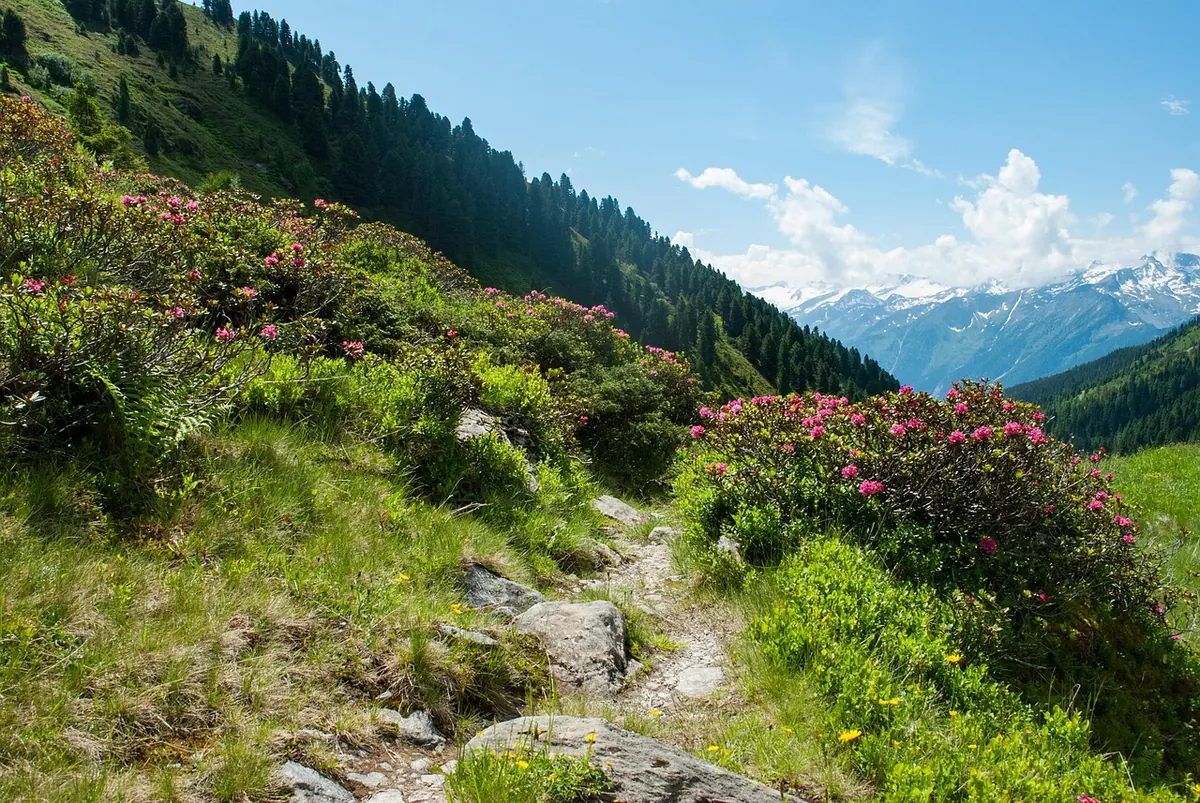
- May to early June: 1,300 to 1,800 metres. This is the classic alpine spring: alpenrose beginning to colour the slopes pink, spring gentians, soldanella pushing through the last of the snow.
- Mid-June to early July: 1,800 to 2,300 metres. The snow-edge species at their peak, plus the first big meadow flowering around mountain huts as they open for the season.
- July onward: The highest passes and basins. Not spring any more, strictly, but the alpine aster, edelweiss and dwarf willows that follow the melt are worth the extra climbing.
Routes Worth Building a Trip Around
Val Codera, Lombardy
A granite valley with no road in — you walk up from Novate Mezzola, or take the lengthy mule track from the valley mouth, to reach the scattered village of Codera. Because the approach gains height slowly, you walk through several flowering bands in a single day. Chestnut woods and primroses at the bottom, larch and heath higher up, and clear streams fed by melting snow. Go in May for the woodland flowers, in June for the upper slopes.
Alpe Devero, Piedmont
A wide high plateau in the upper Ossola, reached by a road that climbs from Baceno. The open ground means the snowmelt pattern is easy to read from a distance: you can see which meadows have cleared and walk towards them. Late May and early June are the sweet spot, with the alpenrose and gentians coming in around the plateau’s stone huts and small lakes.
Valnontey and Cogne, Valle d’Aosta
The valley above Cogne, on the edge of Gran Paradiso National Park, is one of the most rewarding spring walks in the western Alps. The valley floor trail is gentle, the larch woods flower early, and the meadows near the hamlets turn over from primroses to gentians to alpenrose across about six weeks. The alpine botanic garden at Valnontey opens later in the season, so check dates before you build a day around it.
Val di Funes and the Odle, South Tyrol
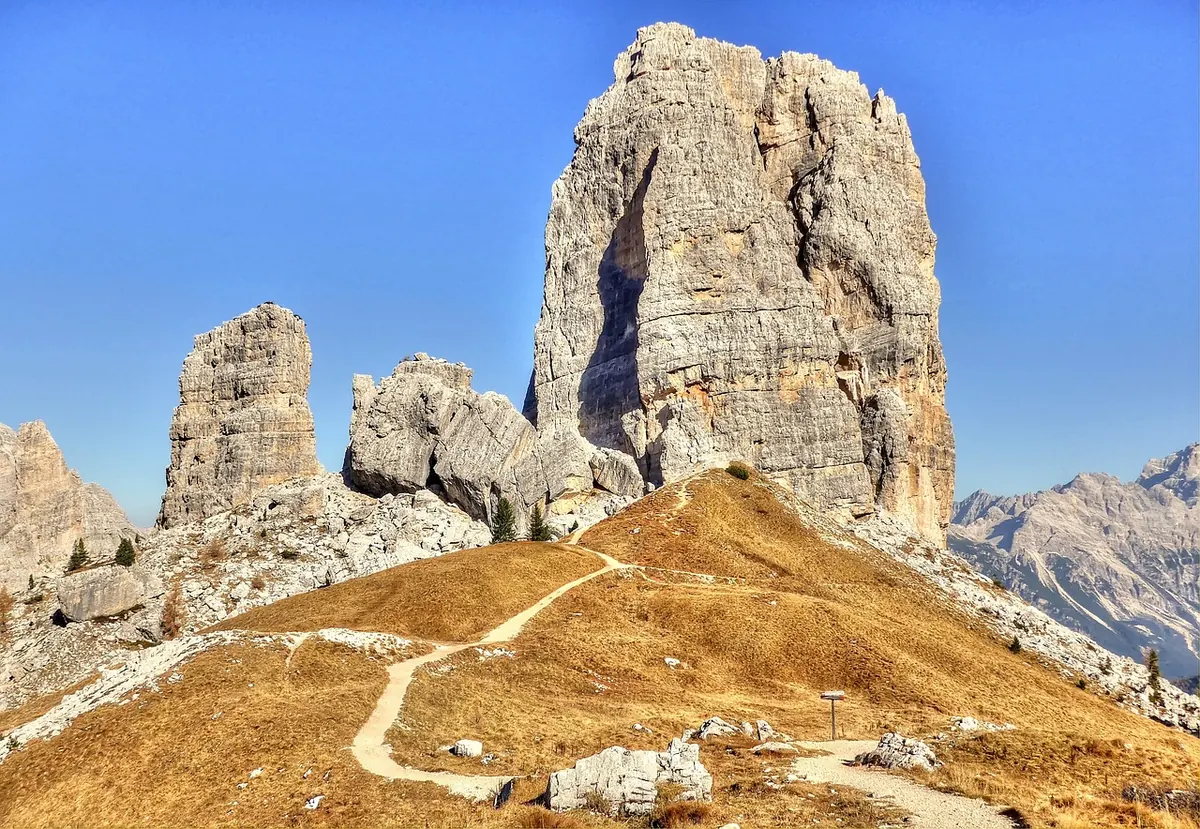
South Tyrol’s meadows tend to run a little ahead of comparable altitudes further west, and the villages of Val di Funes sit beneath some of the most photogenic peaks in the range. Late May into June is the time: flower-rich hay meadows around the farms, with the high ground still snowy above. Remember that these meadows are working farmland, cut for hay in summer — stay on the paths through them.
What You’ll Actually See
Near the snow edge, look for soldanella, with its nodding pink-violet bells, and the white spring crocus opening flat in the sun. Both are small enough that you’ll notice far more of them if you stop and look at your feet rather than the skyline.
On open grazed ground, the spring gentian provides the deep blue, usually as a single star rather than a clump. The darker, larger trumpet gentian comes a few weeks later and lasts well into summer. Alpenrose — the pink rhododendron of the Alps — is a shrub rather than a flower, and when whole slopes of it come out in late May the effect is closer to weather than to gardening.
Higher and later, the alpine aster and edelweiss arrive with the true summer flora. If you’re botanically inclined, take a hand lens and a regional flower guide rather than a phone app; the apps are improving, but on a plant with four similar yellow composites in front of you, a good illustrated key still wins.
Viewing Etiquette That Keeps the Slopes Worth Returning To
Alpine plants are slow. A gentian you could cover with a coffee cup may be decades old, and a picked stem is a hole in the meadow that won’t fill this season or next. In Italy’s national parks and most regional parks, picking wildflowers is prohibited; outside protected areas, many species are still protected by regional rules, so the safe assumption is: look, photograph, leave.
- Stay on the marked path, even when the meadow looks bare. Alpine turf takes years to recover from trampling, and shortcuts spread into braided scars.
- Don’t step onto the snow-edge band to get a better shot. That damp ground is where the season’s whole reproductive effort is happening.
- Keep dogs on a lead in flowering meadows and near grazing animals.
- Photograph with your shadow out of the frame and your feet on rock or trail. A flower photographed from above, in shade, usually looks like a smudge.
- Leave gates as you find them, and give grazing cattle and their calves a wide berth.
Before You Set Out
Check trail conditions locally rather than online only — a call to the valley’s tourist office or the nearest CAI hut is worth more than any generic report, because snow patches and washed-out stream crossings vary from week to week. Carry layers you can add and remove, sun protection for altitude, and more water than the distance suggests. Many huts and rifugi open in June rather than May, so don’t count on a hot lunch.
Finally, treat the weather as the deciding vote. A warm spell can advance the bloom by a week; a late snowfall can erase it. Go with a plan B valley at lower altitude, and if the forecast turns, take the valley walk instead of the pass. Spring in the Alps rewards flexibility more than ambition.
Photo: Schmidsi / Pixabay